
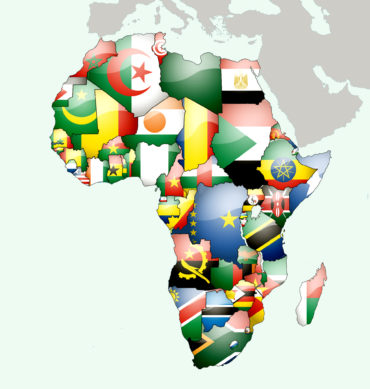
Free trade in Africa: here are the 9 countries whose products are admitted to Algeria
Trade within the framework of the African Free Trade Area (ZLECAR: Zone de libre-échange continentale africaine) officially entered into force on November 1, 2024 and Algeria has set a list of 9 countries whose products will be admitted with advantages.
In a circular addressed to the central and regional Algerian Customs services, the Ministry of Finance explained the rules and modalities for the application of the agreement creating this inter-African free trade area. The circular is dated October 22, ten days before the effective application by Algeria of the provisions of the Zlecaf.
The agreement to create the ZLECAR (African Continental Free Trade Zone) was signed on March 21, 2018 in Kigali (Rwanda) and Algeria ratified it by presidential decree on April 5, 2021.
Its main objective, recalls the Ministry of Finance, is to “create a liberalized market for trade in goods and to stimulate intra-African trade” notably through the progressive elimination of customs tariffs and non-tariff barriers, the improving the efficiency of customs procedures, facilitating trade and transit, etc.
In accordance with the provisions of the agreement, each member state applies preferential tariffs to imports of goods originating from other party states, in accordance with a list of concessions that it establishes.
The list of Algeria’s concessions was the subject of an inter ministerial circular dated September 26.
For the moment, only products from nine countries can be admitted to Algeria within the framework of the free trade zone. These are South Africa, Cameroon, Egypt, Ghana, Kenya, Mauritius, Rwanda, Tanzania and Tunisia.
Three lists of concessions were adopted by the 29th and 32nd summits of African heads of state. List A includes non-sensitive products and includes at least 90% of tariff lines. Progressive dismantling is set at 5 years for developing countries and 10 years for less developed countries.
List B includes sensitive products and includes at least 7% of tariff lines. The products on these two lists will be subject to a gradual dismantling of customs duties in Algeria until their elimination. In addition, they will not be subject to the provisional additional safeguard duty (DAPS), introduced in 2018.
The total elimination of customs duties for products on list A will take place from January 1, 2025, while those on list B will see duties gradually reduced by 20% each year from 2026, until their total elimination on January 1, 2030.
Finally, list C concerns products excluded from liberalization and represents 3% of tariff lines. These products are admitted to Algeria but after payment of all taxes and customs duties provided for by common law.
The export of Algerian products to African countries where the agreement has entered into force will be done according to the list of concessions established by each State, specifies the Ministry of Finance.
Proof of the origin of the product must be provided by a “ZLECAF certificate of origin”, which is “an essential document and which constitutes, as such, the document justifying the original status of the product”.
This document must also accompany Algerian products exported within the same framework to African member countries. Only shipments of products intended for personal or family use and whose value does not exceed $500, when they are sent in packages or $1,200 when they are part of travelers’ luggage, are exempt from proof of origin.
